
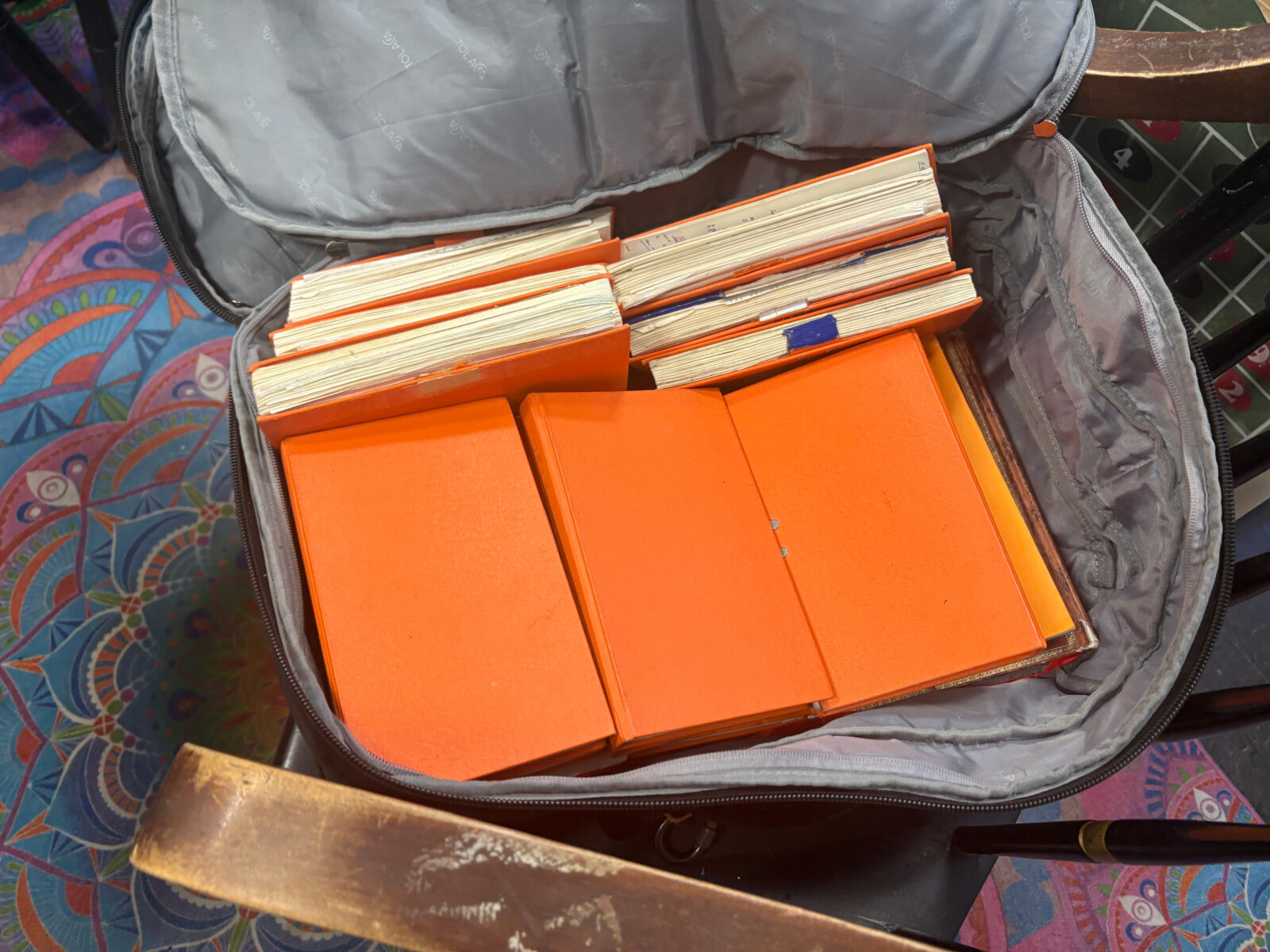
The Math 1.0 and Math 2.0 transition in the terminology of Tao could also be seen as a distinction between a culture of “being” to to a culture of “having”. The dichotomy between “having or being” is a term coined by Erich Fromm, a German philosopher about whom I learned from a mountain buddy in Switzerland. There will be a divide between contemplative mathematics (math 1.0) and industrial mathematics (math 2.0). The former is done for its beauty, as meditation, like taking a hike in nature and reading or writing poetry, the later is produced on an assembly line, by watching a machine do the work. The former is carving the wood with a knife, the later is buying a pressed plastic toy. As I was contemplating my own ventures in mathematics recently, I dug out some old notebooks from 1987 on that I kept as a diary during my time writing this paper (submitted 1990 and published 1992). I would estimate having spent a thousand hours on this for 3 years and there are over a thousand pages of diary entries which I still have, mostly wrong approaches. The level happiness however to see then finally something work out, after 3 years of intense struggle and failure, can not be described. I gained a lot of energy from that moment and also to survive some more difficult times after graduation. A prompt could probably solve the problem now. But it would be like taking the helicopter to climb Dawn Wall. The value lies not only in what has been achieved, but how it is done.
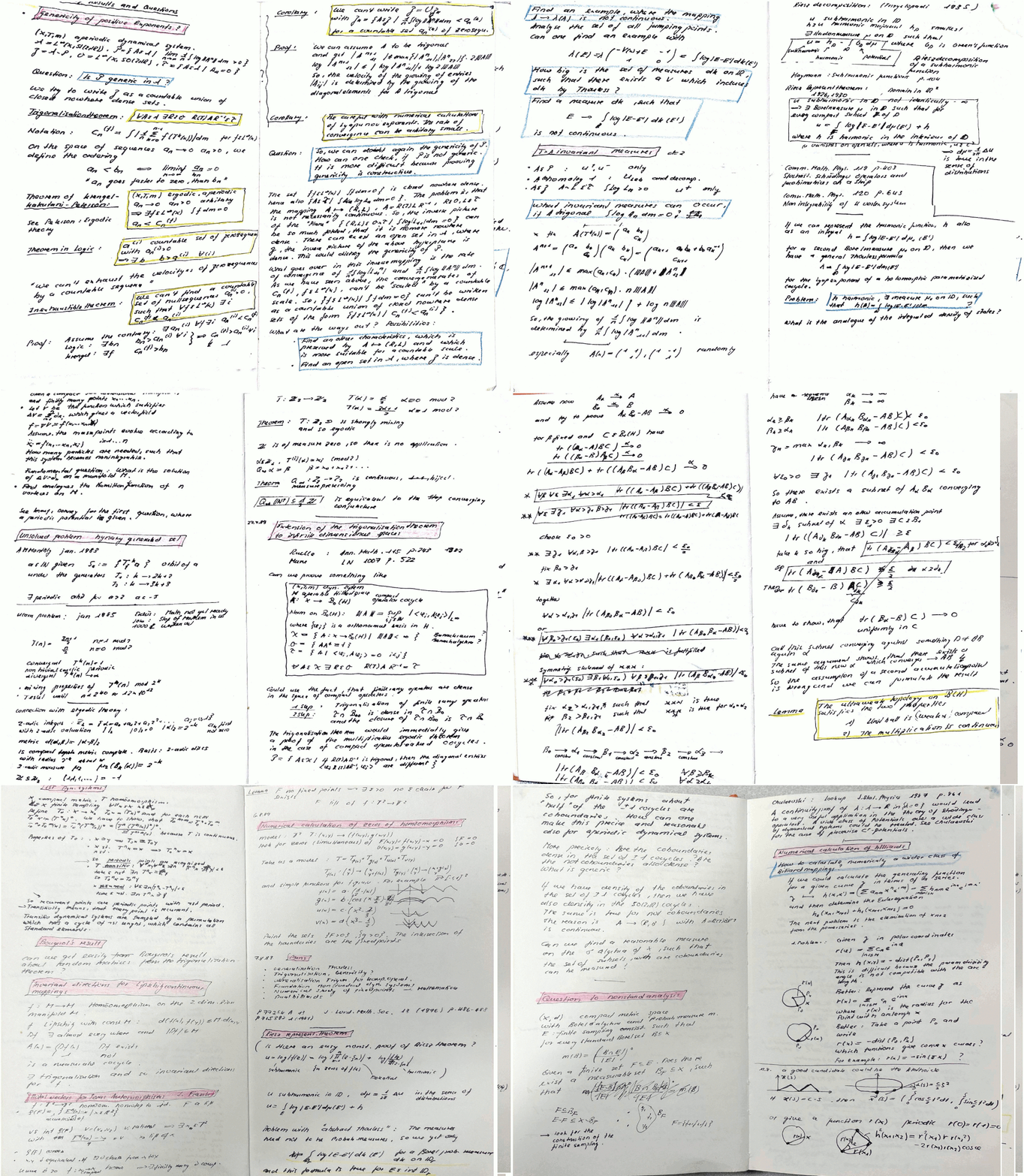
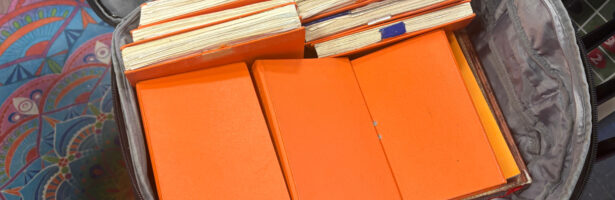
This is not new as Human activities are often divided on “how something is done”, and not so much “what is done”. It matters whether you run a marathon or bike it. We live in a time, where almost everybody an solve an open problem in mathematics but there is not much pride to be taken from such achievements. Just 2 days ago, I learned from a Harvard business school prof that a student of his has solved one of the Erdoes problems. I wrote back that I’m not even interested in looking at it almost certainly is a machine generated proof. Back to the “how”: To the right is a “GIF animation” of one of the orange notebooks I wrote in 1989. I photographed it through yesterday. I did not yet have the heart , to cut that notebook up, scan properly and throw away. A few pages are seen to the right. Its about a 1/10th of one of the few dozen notebooks. It illustrates a couple of the thousands of hours I spent on a single math problem. This is now nostalgia of course. We have entered a “faster mathematics” or “instant mathematics”. I hope that the contemplative slow mathematics still will have a place. The difficulty will be to evaluate things. Who will get the opportunity to do research mathematics, for example.
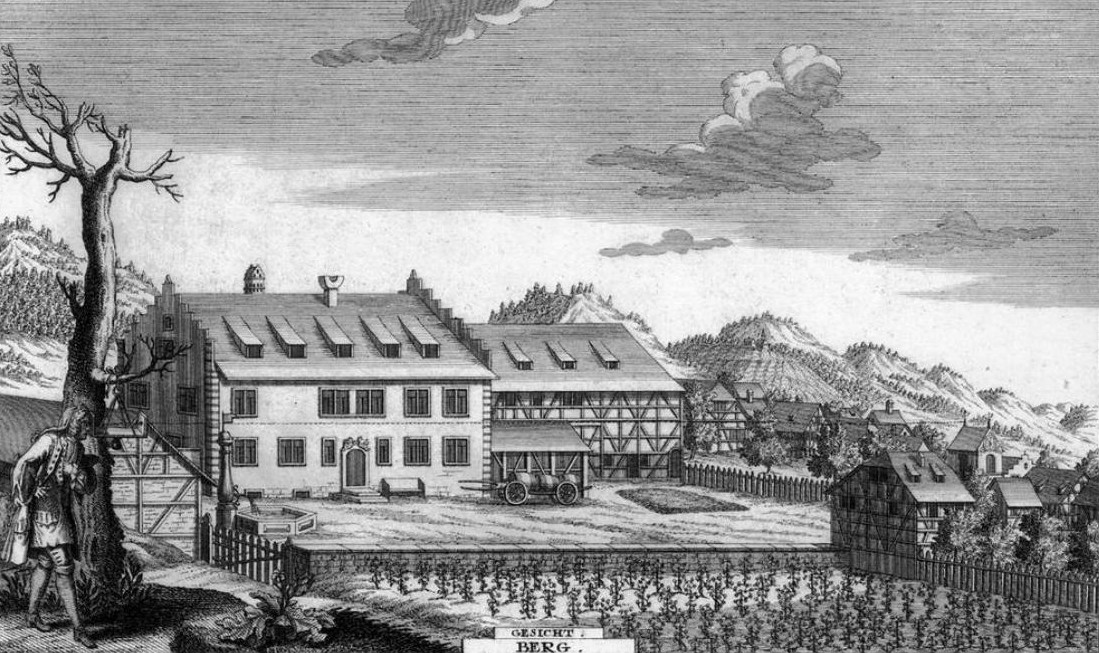
The “Having or Being” division has already some idealism attached. It does not really work most of the “real world”. As humans, we need to “have” some basic income in order to support ourselves. In order to get payed, we need to be productive and deliver something. Very few can afford to live from poetry. Some were supported by benefactors. An example was Rainer Maria Rilke. We wrote once in 2024 about Rilke in this post: “Rilke 100 years ago”. Rilke is somehow close as he not only lived in Wallis in the Swiss mountains, but because he spent some time in “castle Berg” (picture to the left) which is almost visible from where I grew up. Despite being sponsored by benefactors, he still struggled with finances. The majority of the world does not have the luxury to be able to “write poetry” or to “do mathematics as a meditation”. Others have expressed this much better (like Peter Sarnak in an interview I once saw). It needs luck to be able to get away from the pressure of “having”. It is not new. Already Descartes had to teach math to Queen Christina from Sweden.
As for now, I would find it sad to see mathematics slide into an industrial machine driven age. There should remain also the artistic side to the profession. I myself still struggle with the realization, how much has changed in the last couple of weeks. Some are optimistic. There was just a Sanderson video about “that there is never been a better time to get into math”. He addresses there some fundamental issues like “how to give credit to achievements”. This is a tricky one as it taps into a fundamental human desire, to somehow matter. And the question whether humans still will matter is the central issue, not only in math, but in all other professions. My prediction is that there will be more and more push-back against machine generated stuff in the future. But that is not very original. The Spielberg movie AI from 2000 already predicted it. Spielberg managed however very well to to have the machines and especially “David” be displayed as the hero. The humans were the bad guys who the destruction of machines as an entertainment. We rooted in that movie for the machines and displaying a world without humans as a “happy end” was a nice achievement of Spielberg.
