

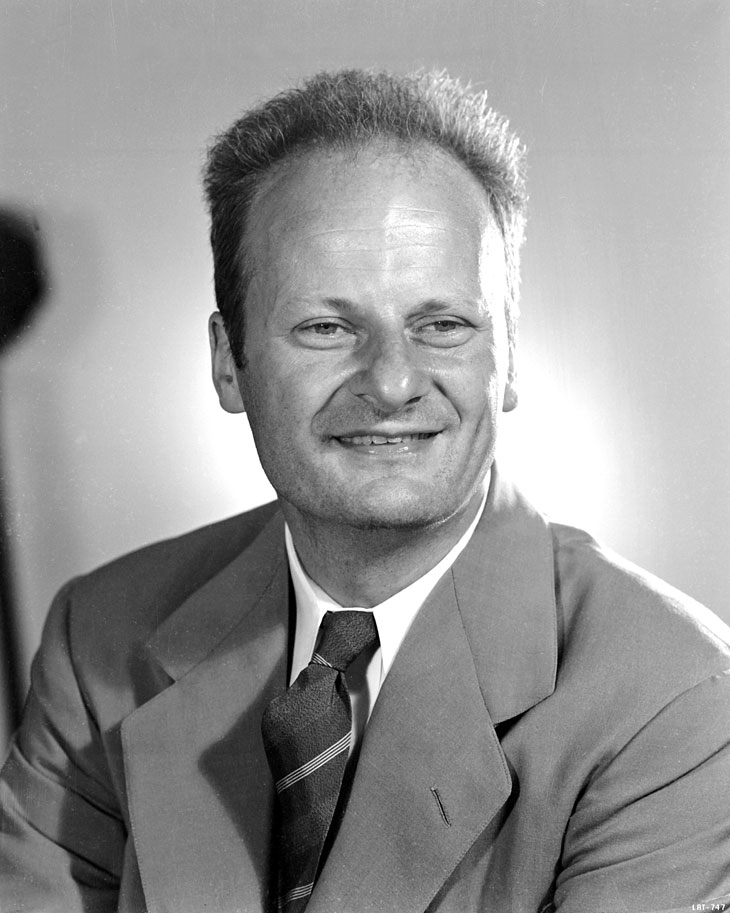
I got Hans Bethe much in my youtube feed recently, probably due to my current interests in group theory. I want to comment on the later but first to Bethe, whose name is in the Bethe Lattice, the Bethe-Slapeter equation, the Bethe Ansatz and more. Most important for science is probably his proof that the carbon-nitrogen-oxygen cycle fuses hydrogen into helium in stars like our sun (earning him the Nobel in 1967) or his calculation of the lamb shift or the theoretical foundation of the deuteron which appears in heavy water. He also led the theoretical physics division at Los Alamos. He appears of course in Nolan’s mesmerizing movie Oppenheimer. Bethe was born in 1906 in Germany and died 99 years old in the US. He had emigrated in 1933 as Bethe’s mother was Jewish. Academically, Bethe is a student of Arnold Sommerfeld and so is an academic brother of Wolfgang Pauli or Werner Heisenberg or Gregor Wentzel who then had Markus Fierz and Heinrich Heesch (the one who almost solved the 4-color theorem) and Res Jost as students. Jost is for me personally interesting (similarly as Heinz Hopf, whose ancestry covers 10 of my other college teachers as well as my high school teacher) as I had college classes from 5 of his students: Klaus Hepp (quantum mechanics) and Walter Hunziker (electromagnetism) and David Ruelle (post graduate course on Dynamical Zeta functions) and Edi Zehnder (symplectic geometry and especially symplectic capacities; I also course assisted for him several times in functional analysis, which had been a lot of fun as he also gave us interesting tasks like writing new problems). Konrad Osterwalder, I only knew as a person and not as a teacher of a course. Juerg Froehlich, (a student of Klaus Hepp and Walter Hunziker) taught us a formidable classical mechanics course in our sophomore year.

As for group theory, Bethe appears twice prominently in the stuff, I was interested recently. First of all, the Bethe lattice is the Cayley graph of the free group 


But now to the reason, I write this post. Bethe was substantial for developing “double groups”. Doubling constructions are central in mathematics. Many constructions of number systems, from rational to complex to surreal numbers, to Dickson constructions are doubling constructions. Also nature seems to like it and physics as well as geometry is full of it: spin structures in particular. In physics, the role of symmetries can not be undervalued. Physics is essentially a mathematical theory of symmetry. The fact that physics is just a tiny part of mathematics is currently hidden as much of physics does not have the mathematical maturity which makes it “fair game” for artificial intelligence. We mathematicians are currently under heavy attack and whether the field will survive it is not clear. In physics, the AI agents still struggle. Group theory is part of physics which mathematicians know of course much better than physicists in general. We were as students recommended to read the”course of theoretical physics” books of Landau-Lifshitz, which are somehow forbidding. I tried to read through but had to give up. It is a 10 volume cycle, very cheap at that time, each volume was maybe 10 franks as the east Germany publishers (before the fall of the wall) could produce very cheaply. I liked more the books of Walter Thierring as he managed to put physics in a more concise way. The Thirring abstracts felt like poetry. But you look into those Landau-Lifshitz books, they treat things like group theory or representation theory “en passant”, a bit like the Math 55 courses here. I had 2 semesters of group theory (Algebra I and Algebra II by Urs Stammbach), then a course on classical Lie groups and Lie algebras and representation theory (by Guido Mislin). A physics book runs through that in a few pages.
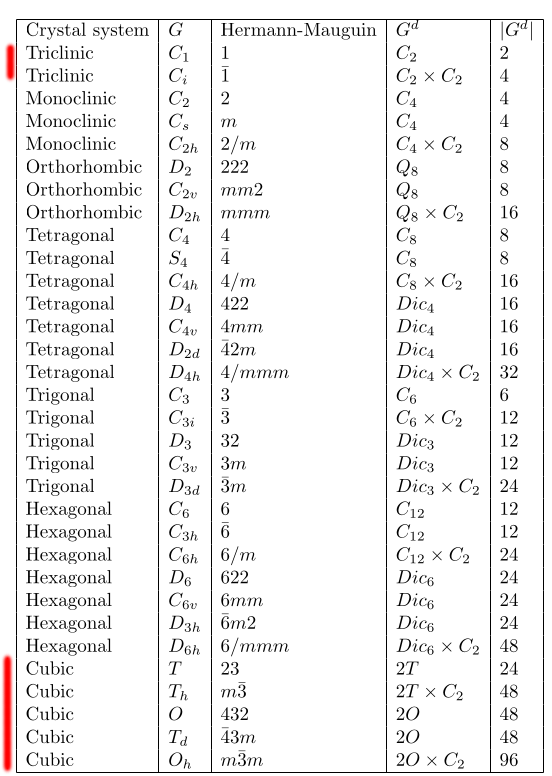
Now to double groups. These are double covers of crystallographic groups in SO(3). There are two type of covers: 


