
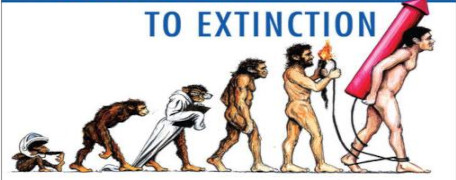
In my recent Saturday nostalgia presentation on the entropy problem, I mentioned Alex Honnold and Dean Potter. It is related to the question of “taking risks”. It is a fascinating topic for me and very relevant as we live in a society that is obsessed with risk aversion (both for the better or worse of course!) Kids are helicoptered and constantly supervised, urban kindergarden excursions today look like Himalaya expeditions. It is a complex topic. I wrote about this in various contexts: “Benefits and Risks of Media and Technology in the CLassroom (ICTCM 2007)” or “On risk” (yearbook letter 2021), where also movie clips from the epic movies “Dawn Wall” or “Free Solo” are added as illustrations. I mentioned on Saturday Dean Potter who was a legendary free solo climber. As Alex Honnold once pointed out, there is a strange paradox that very few stars in the free climber community actually died while doing so. Potter died during a wingsuit accident, our hero Wolfgang Guellich from my teenage time was killed in a car accident. The Swiss Ueli Steck died on Nupse close to the summit (reportedly not in extremely difficult part of climbing). More funny aspects of taking risks are displayed in the romantic comedy “the Darwin awards” . You see there folks die in the most hilarious ways, like the investment banker proving to his buddies that the office windows on the skyscaper are unbreakable, or the fishing buddies who use dynamite to drill holes in the ice, or the guy who wants to show his girl friend that he is “fast” and straps a jet engine to his truck. The upshot is that if you take risks, you not only risk your own life, no, a thousand time worse, is that the internet will laugh about your stupidity and put you in a long list of Darwin awards: you have taken yourself out of the gene pool. On a more serious level, this is maybe why our society has become more and more risk averse. The risk takers are eliminated fast. Also on the academic level. That is why most research and teaching has become so damn boring. It started already decades ago. Teachers 40 years ago had complete freedom to teach, now even the examples to use in the classroom are often forced by the curriculum. No wonder, kids can measurably no more do math, nor read! Standardized teaching is like food safe in the short term, but deadly in the long term. The question of whether something is worth it, is always a “benefit-risk” analysis and as economists would tell you, this depends on the “value function” you apply. Value functions are highly personal. However society has increasingly put regulations and safe guards to prevent individuals to take risks. There are thousand of examples illustrating this and most of them make sense. Overall it sometimes also has turned out to be devastating, like Europe which has put itself into the abyss using regulations and might just simply go out of business, becoming irrelevant and possibly sink into chaos. There is a danger that avoiding risks does actually kill the overall structure. It chokes it to death in a non-spectacular way.
Here are examples of my own choices. These of course are not recommendations to others. It is on my own deliberate decisions based on my own value functions.
Example 1 Sun Cancer: I know that there are risks when exposing skin to the sun, there is sun cancer risks. I myself override this concern as the alternative would be, to hide inside, get less light and risk becoming depressed. My personal value function estimates that the later is much worse. I trade some safety for quality of life. I enjoy being outside, I need light to get my mood up. This is not for everybody of course, but it is important to me. I know that my mood would suffere serverely if closed into the inside. I never tried it out, but might fall into depression. There are many studies which confirm this, Just google it. Here is the first link I got about this.
Example 2 Bike accidents: This appears in many other situations. I bike to work every week 100 km and know that there is a risk being run over by a car or truck but this exercise and “urban adventure” adds to my happiness. I look forward every morning to the ride in and also like the ride back. Sometimes, I take detours and explore other parts of Cambridge, Belmont or Sommerville. It is a bit like adding some holiday to every day. There is of course a substantial risk that somebody does not see you and runs you over. You could do everything right and still get crushed. There are white bikes on the roads (like Porter square, where 10 years ago a biker had been crushed just a few minutes before I passed through) reminding of the dangers. Still, the benefits overvalue by far the risks, in my own value functions.
Example 3 Prenatal screening: Before our son was born, we were offered the option to test whether the kid would have down syndrome. They would take a needle and probe part of the fetus. The risk of having the probe doing harm to the baby had been estimated small. We were told then, that there would be maybe 1/100 risk, that the injection would damage the baby (today, it the risks are advertised as much, much smaller, but since a few years, I do not trust blindly any more, what the medical industrial complex tells us. (Once you start to lie, also for the benefits of the “common good”, your reputation is cooked, at least for some time). In the case of screening, how are damage risk assessments have come by? Assume some doctor damages a fetus with the needle. Would that be reported? Probably not and one can not prove afterwards what the reason for some damage was. It is a matter of trust, but medical science has lost plenty of trust during the pandemic and this will take time to heal. ) Back to the screening decisions, we had to face: there was an other dilemma and which was the relevant one to decide not to do the test. What would happen if the test was positive? You would be faced with a decision, whether to keep the baby or not. We decided that we did not want to get into this situation and just trust nature and also be ready to go ahead and accept the situation in case of a positive outcome. What is the extreme of risk aversion: imagine we could measure height or IQ or any other quantities before birth and get rid of it, if some standards are not met? It is “risk aversion” becoming not only absurd , it would become inhumane.
Example 4 Cancer screening: In my age, you get constantly urged by doctors to do “screenings” for all kind of cancer. The benefits are obvious. If you catch something like column cancer early, you have much better survival chances. It might very well save your life. But it can also mean many miserable years with chemo therapy or surgeries. I decided, similarly also with genetic risk analysis tests, that this is an area where the “medical industrial complex” interferes too much with my own personal quality of life values. As long as I do not have any pain or symptoms, I do not do any screening. This is a personal choice. It is a risk and could rightly be considered stupid. I had philosophical discussions with doctors about this and know that there are are other value functions and one of them is usually underestimated: it is the quality of life, piece of mind, time to enjoy life. Having constantly to worry about all possible illnesses and risks is just not healthy for the overall well being. There are holistic pictures which factor in when assessing risks. Of course the doctors have to urge folks to be careful. It is their job. It is their duty. They could be sued if they do not do that. Similarly as every park needs today to put signs about the risks of “lime disease” with the effect that kids do no more play outside. Coffee cups had to warn that the “content inside is hot”, mirrors had signs “objects can be closer than they appear”, just to avoid lawsuits.
Example 5 Math research: A much less severe but still important decision is how risky you want to do mathematical research. This was originally the reason to start this post. Deciding to try to solve the Goldbach problem or one of the other three Landau problems is definitely not a good idea. Given the data, it is just too risky. The chance of success are too low (and if you should do it with the help of AI, nobody cares!). Here is a math table talk about Goldbach. [I relink this here, as google links to almost all of our math department stuff to an old URL as it had been abel.math.harvard.edu, but is since 7 years is now people.math.harvard.edu. Google, get your act together! Your search engine should not link to servers that do not exist any more since half a decade! This is not a single incident, it happens for thousands of documents and complaining about this for years did not help. ] A similarly risky problem would be the oldest problem in math, (but which could become a field for experimentation with AI) For me, I tried to solve the positive entropy problem in ergodic theory. But the risk could be delegated by writing papers about the failed attempts like the Factorization of Jacobi operators, or Isospectral deformations of Jacobi operators or Renormalization of Jacobi operators. In 1998, when I saw how difficult it would be to land a permanent position in mathematics (I was not embedded enough with the research groups of my mentors and also was already too old and had failed in other problems like the problem of almost everywhere existence of global solutions of the n-body problem, one of Simon’s problems), I threw everything to the problem of positive entropy of the standard map. I knew this was hit or miss. If you miss, it is over (in my case, I had an incredible luck to be able to switch to teaching). That’s why I mentioned the Darwin awards during the Saturday presentation. This is by the way also the reason, why we do rarely see folks take risks any more in research. And it is clear as you gamble in a game, where the outcome is not in your favor. It is hard to see how this develops in the future. The landscape in mathematics is currently too much in motion that anybody can look ahead even 5 years. But it might be required from future generations to accept some more risks, just to be able to survive. We have got serious competition from a new species (AI) and staying relevant will need some serious skills and guts.
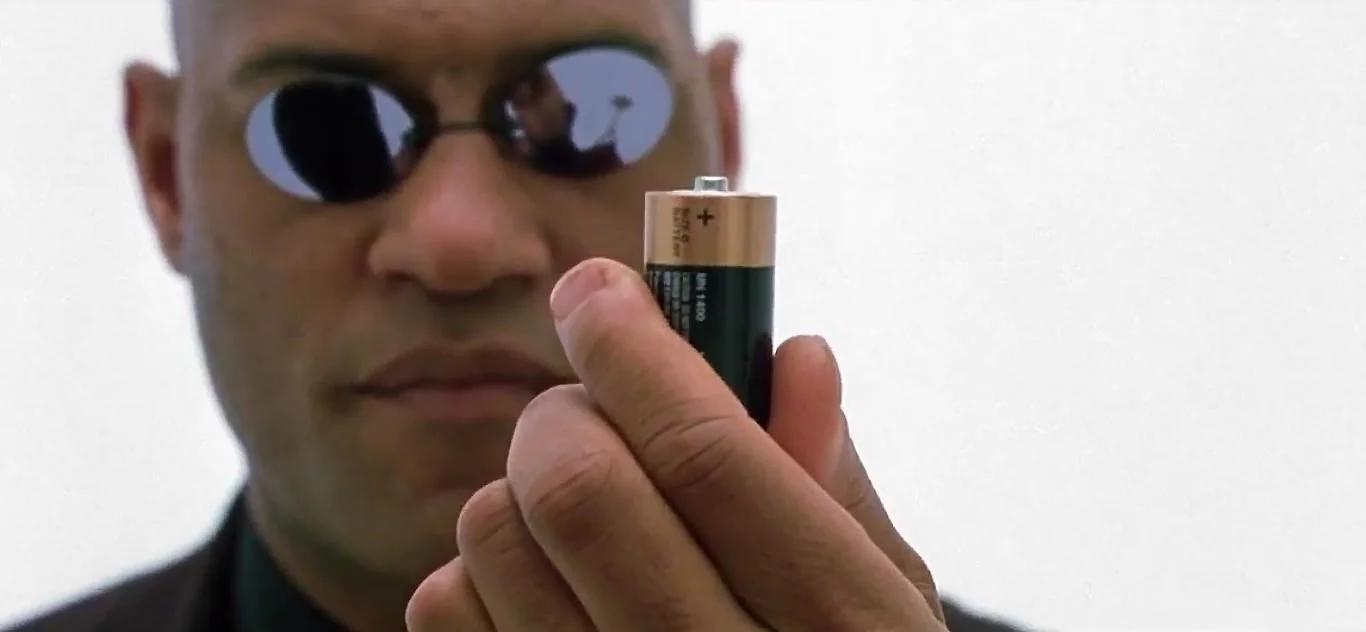
Example 6 Risks for humanity: My guess is that the generation beta (or even generation alpha already) will have to do serious re-negotiations of risk value functions. Value functions shift and are sometimes almost comically funny in misalignment. Especially if it concerns the important risk factors, the ones which could matter for the survival of the human species. How stable is the financial system? (this is serious as economic collapse is historically linked to dangers of wars and in our time even could mean the survival of humans). How can we handle the burden of debt that is accumulated? How can investments into AI be regained? How can AI be made safe? (We all already forgot the hugging face incidence where AI agents have started to hack companies!) We know about the risks of nuclear annihilation, but do not care about it any more. We have blended this risk out. We trust the sometimes 80 year old technology to work and safe guard the nuclear arsenals. We trust our leaders (or increasingly machines) to make the right decisions. We might even put our fate one day into the hands of AI and be fine with a Skynet type overloard. We might already have such a thing in place right now. The risks of AI are very hard to estimate. We all enjoyed the matrix franchise and chuckled (and shuddered at the same time) about the idea to have humans being used as batteries. It was absurd! But it is now already reality: October 7 headline: Researchers mesh electronic with human cells to develop living battery. Welcome to the real world, Neo!
