
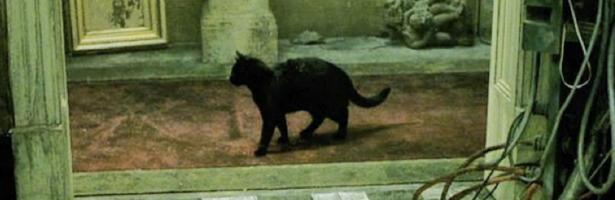
Epistemology, the study of knowledge starts with a leap of faith. Not of the religious kind. But we have to have faith in that we can think properly, that our memory works reliably. A brain with a neurodegenerative illness is not able to do logical steps any more. We have to assume that our thinking works. Already Descartes imagined a “Devil Demon” who could fool us. Hilary Putnam (1926-2016) who lived just a few blocks from where I’m writing this, came up with the thought experiment of the “brain in a vat”. It is a theme for movies like the “matrix”. We could be living in a simulation and programmer playing with us could change the rules of the game at any time. One can easily imagine a system, where signs like “deja vue’s” or “glitches in the matrix do not occur” and that the avatars in the game do not realize that they are avatars. I personally do not believe that we live in a simulation. I also do believe that our memory works, at least for mathematicians. It does not work for politicians of course. They say A and then B and then (not A ) and B. But we can assume that rational beings exist.
I’m not a philosopher but I like some stories that are related to Epistemology. One of them is Dyson’s picture that there are two type of mathematicians, birds or frogs. Birds are the Descartians, and frogs are the Baconians. Named after Rene Descartes and Francis Bacon. I wrote about such things a bit once in the talk “Golden Rotations”. As a typical Swiss I optioned there to be neutral in this matter. It is a bit a silly distinction anyway. Most successful mathematicians are both Baconians and Descaretians.
An other interesting story is about Lakatos and Feyerabend. They were friends, had fierce debates about the scientific method. They even planned to write a text “for and against method” together, where Lakatos would defend rationalism and Feyerabend would attack it. When Lakatos died, Feyerabend published his side in “Against Method”. When I was a student at ETHZ, we all had to take courses in a “gened” direction, different from mathematics. In the forth semester, I followed the lecture series by Paul Feyerabend called “limits of knowledge”. The events were lively as almost everybody was against Feyerabend. I myself more recently started to have aversion against “anything goes”. If machines start to do science (and they already do), and surpass us, the value of scientific work declines. If there are a 1000 Terry Tao machines, the value of Terry Tao becomes nil. Most mathematicians are still romantic about this and claim that AI can not do fundamental research. I myself cope with this that I refuse to have machines do the thinking for me and insist that I “own” every thought. For me it is about “being” and not about “having” to say it with the words of Erich Fromm (I got introduced to Fromm by a climbing buddy from the Swiss alpine club). The book “Haben oder Sein” was a bestseller in Germany and Switzerland.
