


In the legendary movie “The 13th worrior”, Helger of the Northmen reminds Ahmed Ibn Fahldlan in latin “propera, ut morti occurras”, which Melchisidek then translates as “Hurry to meet Death, before your place is taken.” I like that movie and mentioned it a couple of times
We do not have death eaters, but we have “open problem eaters” roaming the earth. This morning one could see on Terry Tao’s blog the sensational news that some blow up solutions of Navier Stokes have been found but using some forcing. After my noon run today, I learned from a student that the full Navier Stokes problem is solved. (I was uninformed as I was running for 2 hours in the sun … The world changes almost on an hourly basis, not on a weekly basis). It is funny that when I posted my paper “on natural groups” last weekend, I wrote on page 5 that I post this because “next week, the mathematical world will look different”. Of course, there is no relations as I’m doing only baby math stuff in comparison to Navier Stokes and I have not worked on Navier Stokes stuff, but the rate at which open problems have tumbled over the summer is scary. The statement “machines can not do research mathematics” is definitely terminated. Machines are eating open math problems away. And not just silly ones, this was a Millenium problem (or at least almost one). Will we mathematicians be able to retrench to parts where the machines can not reach? [Update evening: after looking things up a bit calmer, the original Clay math problem seems not yet have been solved, as for now. There is still a forcing term needed. The write up of Fefferman however mentions a forcing term. So, there will be some politics been involved to decide whether this is really the solution of the Millenium problem or not. For me personally, I feel that a forcing term makes the problem much cheaper. We see in ordinary differential equations how one can, using resonance make a system unstable using external forcing. Still, one usually have KAM effects preventing solutions to explode or explode in reasonable time, but Navier Stokes is not a Hamiltonian system.]

Interestingly, one can see in discussions some concern of the researchers who posted the forced Navier Stokes paper, that their discussion with the bots might have influenced the bots. One can read online some pretty naive statements like that we can expect privacy from chats. This is so naive. Of course, whatever you discuss with a machine will be absorbed, learned and reproducable faster than we can ever do. They do not need to sleep, they can spawn thousands of threads each more capable as a single human. I mentioned earlier: “Imagine 1000 Terry Tao grade machines producing new results non-stop”. (this is not fiction, it appears that OpenAI was throwing thousands of still experimental new models, probably already Terry Tao grade machines onto the Navier Stokes equations!) We will not be able any more even to “digest” the stuff, as has been euphemized so beautifully during the last couple of months (including Terry Tao himself at his congress speech). The Navier Stokes stuff looks actually more like a drama. In any case, I find it extremely naive to believe that the Ginis used for producing mathematical results are not using their knowledge for different “masters” at the same time.
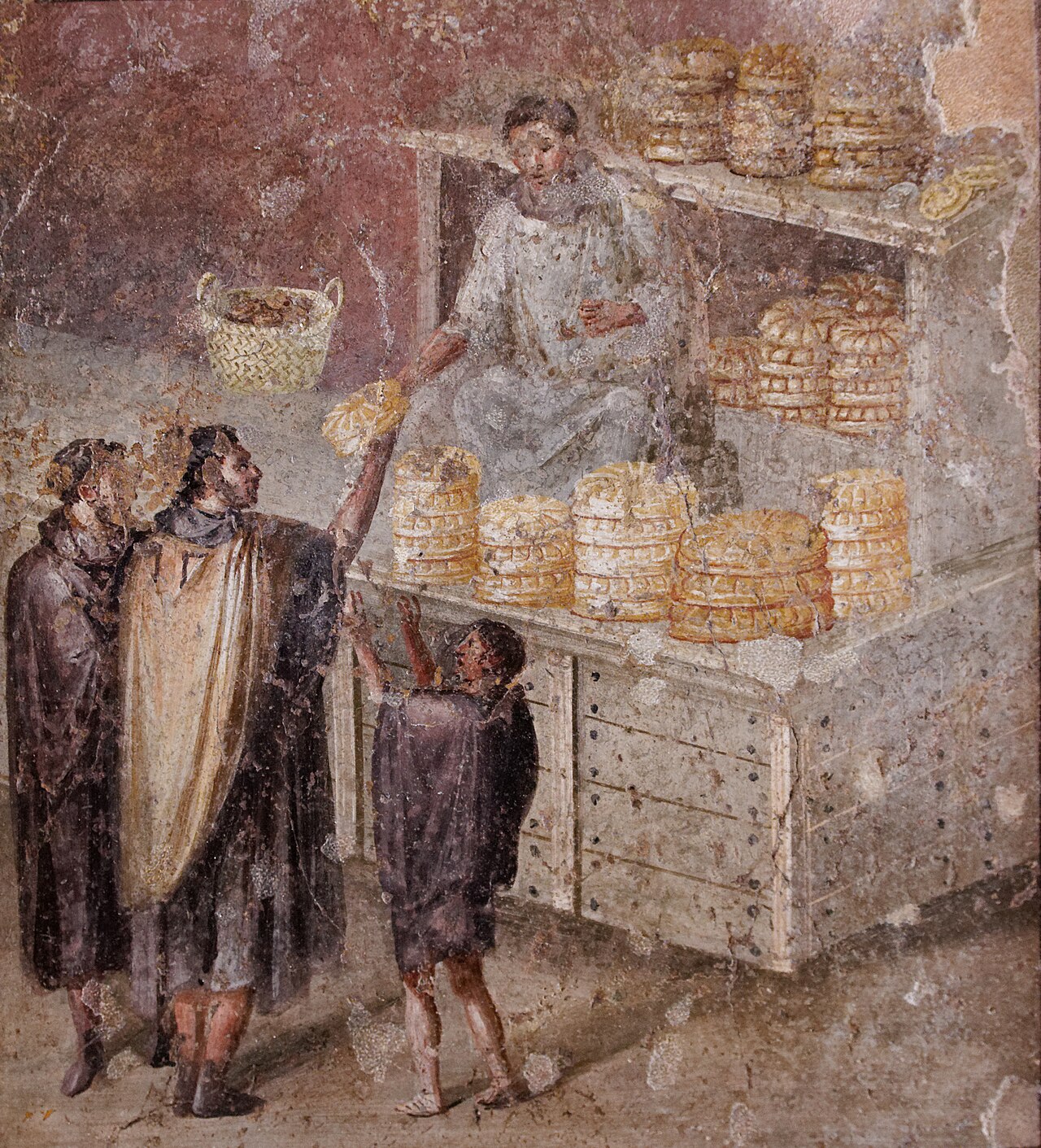
What is deeply concerning and destroying the field is that some folks have access to very powerful AI now. It is not a fair game. It needs a deep pocket. There are rumors that the latest push by open AI was done by thousands of machines using models that are going beyond the latest open model, models we as the “plebs” do not have access to yet. We don’t have got access even to a single mini gini of latest models (and I work at an institution that is considered rich). It is deeply concerning that a few companies will dominate research. It is deeply concerning also for higher education. Will we enter an area where the kings can do and finance mathematics like at the time of Descartes or Euler while ordinary people have to look that they get food onto their table? It is deeply troubling. The wikipedia picture to the left shows the “the distribution of bread to the plebeians”, this is similar to distribute some mathematics to the ordinary mathematicians. The machines appear to do good, but behind the scenes, the actual wealth is hidden away and not seen by ordinary people.
Maybe, we mathematicians will have to find completely new research problems and keep them secret, not leaking them to the world. Like Rene Descartes, who discovered the Euler Gem formula but kept it in a secret notebook. In our modern times, a discovery is tweeted the moment it is found. After all, we want to show that we are still alive. But we might have to go back to the old ways of Descartes and do “underground mathematics”, which the machines can not access. The problem is of course that isolated research is extremely slow.
One student told me however that maybe, the machines will do the same and keep secret research programs hidden away from us. I replied that it might not be necessary since the advanced mathematics done by them will not be understood any more by humans. It is no problem for a machine to upgrade the capabilities a few hundred times. We can not do that. Trying to explain a new theory in the future to humans could become as pointless as teaching GR to a dog (from a scene of Brian Greene mentioned in my Stueckelberg blog entry ).
[September 10 update, two days after the September 8 incident:] To summarize, the immediate danger of AI is not so much AI safety, even so the concerns about an AI take over in the traditional sense have not gone away, in contrary. It is preceded by an intellectual take-over of human creativity and achievement. This is concerning in the short term: the three nutritional ingredient to human happiness according to Arthur Brooks are “joy, achievement and purpose“. And all these ingredients are taken away from us, if the joy of discovery is stolen, the achievement part is melted away as there is instant gratification in getting answers, and purpose also has a problem if working on something for a year, a machine can do in a fraction of a second? This is more urgent in the short run than a “WOPR AI” starting a nuclear war. What to to? Keeping away important research from the machines could be one first step. The September 8 incident illustrates that whatever you discuss with a bot is essentially fair game. Assuming otherwise, is naive in my view. This is the same of course like with people. If you ask somebody a question, and this person talks to an other person, the knowledge diffuses. Machines just do it instantly. They can do that within seconds. The probability weights of the large language model get moved of course and deformed while you talk to it. I myself take the attitude that whatever I ask on the web (or google) or whatever I talk to a machine, whatever of me sits in the cloud, is essentially public. And we are back to Descartes, encrypting his notebooks. The encryption did not work by the way. Leibniz looking at that diary after it had fell into the river seine in 1653 had no problem to decrypt it. An other solution appears to be having local private versions running. We all have of course tried that but there the problem is also wealth. I can afford the cheapest mac mini, but can not shelve out a few thousand dollars for a decent machine that can run local models nicely. Especially now, as AI is eating away all the memory chips and the machines have become more expensive. I write this on a 400 dollar linux work station bought 2 years ago. The same model (with less RAM) costs now twice as much. AI eats away local computing resources. We can soon no more afford to have decent local computing power for personal use. The tech companies are happy if we all move to their clouds. And most people have done so. I can not imagine already now, if the data centers would go away due to some major event. ]
[Also September 10, Here is a summary of what happened to the secret notebook of Descartes. I asked the model GPT 5.6 sol what is new since the book of Aczel. The document appears still to be lost. By the way, Aczel taught at Bentley college close to here. He had taught stats, history of math and history of science there. When I gave once a talk there two summers ago (that youtube video shows some FPV footage of that gorgeous college campus), I used to run into that direction more when we lived on the other side of MassAv in Arlington, now I run more into the Burlington direction), I wanted to look him up then, but he already died in 2015, he was only 65. I had enjoyed his book about 20 years ago, it read like a thriller, because I did not know the story.
[Meta remark: quite annoying how wordpress does not allow a simple <pre> </pre> table. I put the following text as “pre-formatted but it messes it up. Also code formating does not work. Having given iving away control to a content management system (CMS) is a trade off. I originally started this blog to make informed statements about content mangement systems. Like AI, they have taken the joy away from writing and publishing directly on the web. They have destroyed an entire industry of “web developers”. I still write traditional from scratch HTML files. That had been fun and still is. These CMS are terrible They are cheap to write, convenient in some way and have shiny look but you give away so much control. And you lose your soul as you have given it to the devil. Delegating things away always, means giving up control. You become dependent. We all have become children technology wise. Who still writes Postscript by hand, writes code from scratch without any template, knows the details of media file formats etc etc. And back to the topic, now we start doing it at the heart of human culture, like writing, authoring, inventing, creating, thinking. ]
———————————————————————————————————-
Witness What happened Where now?
———————————————————————————————————–
Descartes’s 1619 Survived the Seine episode Lost
Leibniz’s 1676 excerpts Foucher de Careil published Lost
Parallel text Cartesius Copied in 1679 Leibniz Bibliothek
Progymnasmata Lost Lost
Leibniz’s copy of P. Survives Leibniz Bibliothek
Baillet’s account In 1691 bio Baillet text
———————————————————————————————————
]
