[Update 9/7/2026: as things change so fast, I decided to put up the most recent note on natural groups here. [ArXiv]. As mentioned in the note, the mathematical world will almost certainly look different already next week. We live in a hyper-drive time. Will there be any time again, where we can do mathematics and take our time? Maybe not. ]
An abstract group (G,*) is a reflection group, if it is generated by involutions. This means there is a subset S of G which consists of involutions such that every element g in G is a product of finitely many elements in S. Note that S can be large. In the Boolean case for example, a group of order , we could take , all elements except the identity. The k can be an arbitrary cardinal. We knew already that every such group is natural even so the cardinality is large. The Boolean group G is actually the additive group of a vector space over the field . I mentioned last time two problems. The first one was whether every reflection group is natural, the second whether every additive group of any field is natural. I was shocked two days ago to see a paper of Alex Sutherland who proved that every reflection group is natural. It is actually an amazing proof, using a few nifty tricks. I will talk about this more once this paper is available, but the arguments are all sound. [Update September 9: the article of Sutherland on ArXiv.]
Having no cardinality restriction for the result to see all reflection groups to be natural is nice as there are examples which I pondered, like the automorphism group of a non-standard probability space. Usually in probability theory one assumes the probability spaces to be standard which means that the automorphism group is not larger than the continuum, so that the old result about reflection groups would already have applied. But now it works even for crazily large probability spaces. There is an other nice group related to probability theory which I was fond of as a student already: take any sigma-algebra and take the operation which is the symmetric difference. If one looks at the group $latex one has a nice Boolean group (as usual one mods out sets of measure zero) so that is the only element. I had been as a grad student interested in that group in the context of dynamical systems. If is a measure preserving automorphism, one can think of and look at the cohomology group G/(dG) which looks at equivalence classes of non-coboundaries. This question was relevant in Lyapunov exponents. I picked the topic up again in 2003, using tools from spectral theory to show that the cohomology group has the size of the continuum (a theorem which Greg Hjorth had shown me the proof of at Caltech). Such topics already go close to the foundations of mathematics (especially descriptive set theory). Indeed, for non-standard probability spaces, one can have that the cohomology group is trivial.
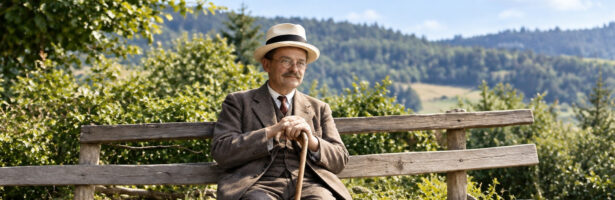
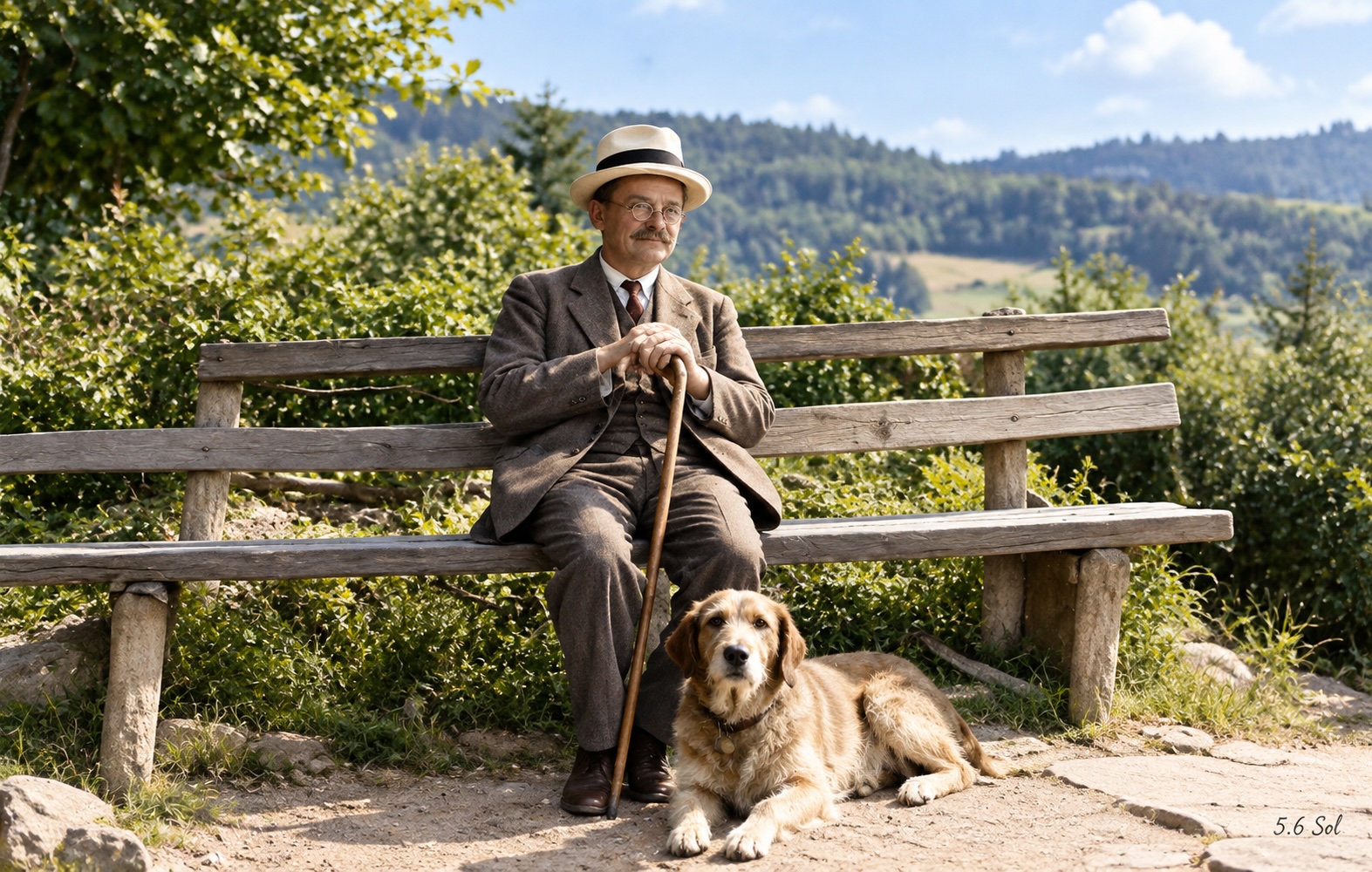
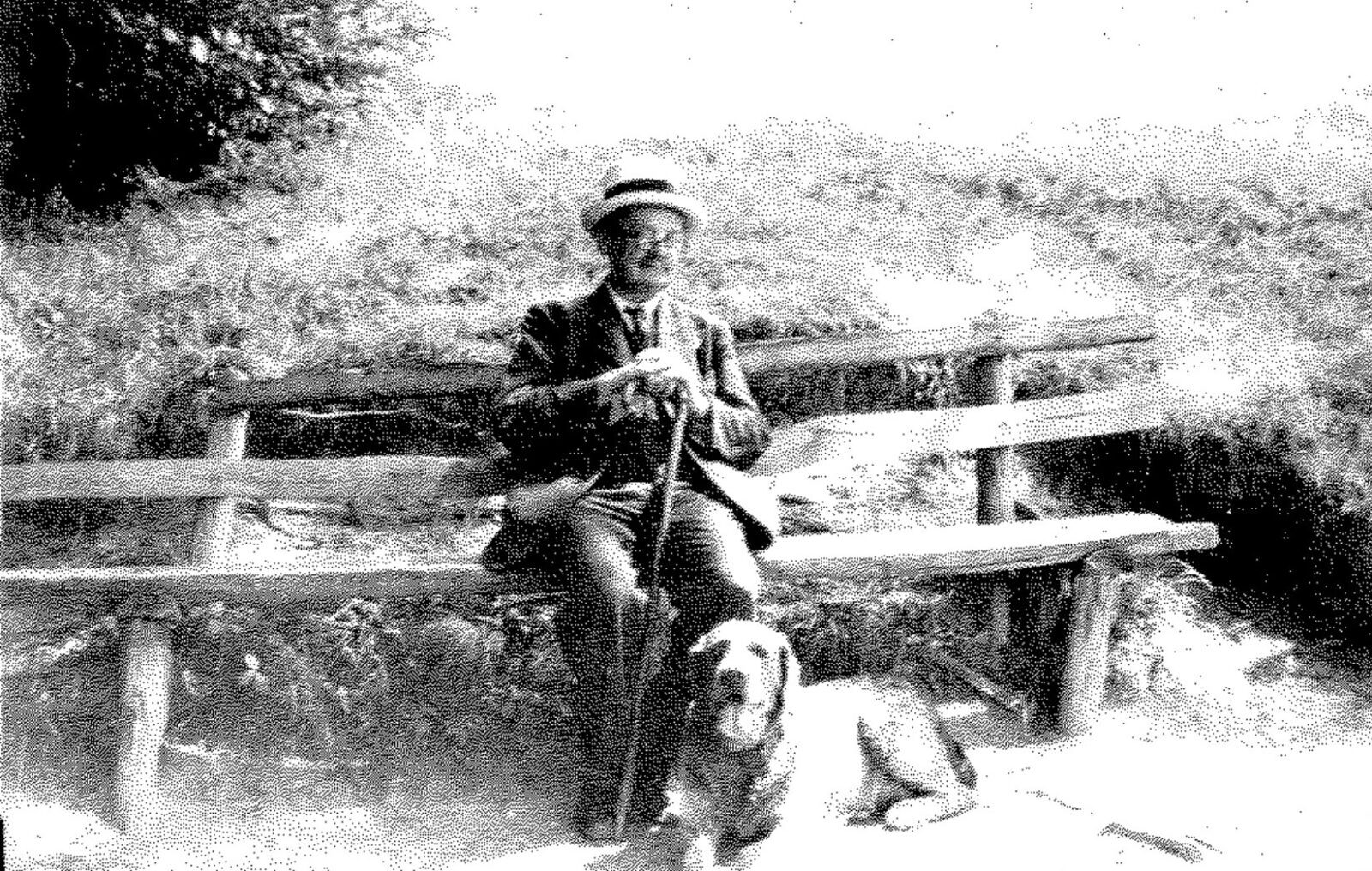
The proof of Sutherland showing that all reflection groups are natural also goes close to the foundations of mathematics. The proof uses the amazing well ordering theorem of Zermelo. (I prefer not to call it Zermelo’s theorem because Zermelo has this beautiful theorem on games, which we also revisited in our “god number project from the spring”. The well ordering theorem is one of the most amazing theorems in mathematics because it is non-intuitive and equivalent to the axiom of choice. I talked about this a bit in 2001 here on youtube, where it is the fourth theorem in a list of 10 theorems in logic and set theory. A well ordering of the reals for example is already crazy. For the integers however, it is easy to get a well ordering: take for example. Today, we prove the well ordering theorem using transfinite induction (something also the proof of the naturality of reflection groups uses), but interestingly, Zermelo did not use this (he however used transfinite induction in disguise). Zermelo was attacked for his proof. Some stories are told here. I personally believe that transfinite induction (which is part of ZF already and does not use AC) is really a dangerous part of mathematics. It is a place, where some inconsistency could be derived from (provided it exists). The brutal fact told by Goedel however is that we never can proof the consistency of ZF within ZF. There is also the story about the encounter of Zermelo with Goedel at the 1931 congress in Bad Elster. The picture to the left is from article of Olga Taussky-Todd who met Zermelo at this congress (I thin. To the right is a machine enhancement. I myself met Olga Taussy-Todd in 1995 at Caltech, shortly before she died.
Zermelo lived in Zuerich at Schoenbergstrasse 9 just a block from the university of zuerich.